

R-panels are a durable, cost-effective metal roof option widely used on commercial buildings, metal building structures, agricultural structures and barndominiums. But any roofing contractor who has investigated leaks or panel distortion caused by thermal movement knows the real complexity isn’t the panel itself — it’s how the roof is fastened. Improper attachments or substrates can restrict expansion and contraction, compromise watertightness and turn a reliable metal roof system into a liability.

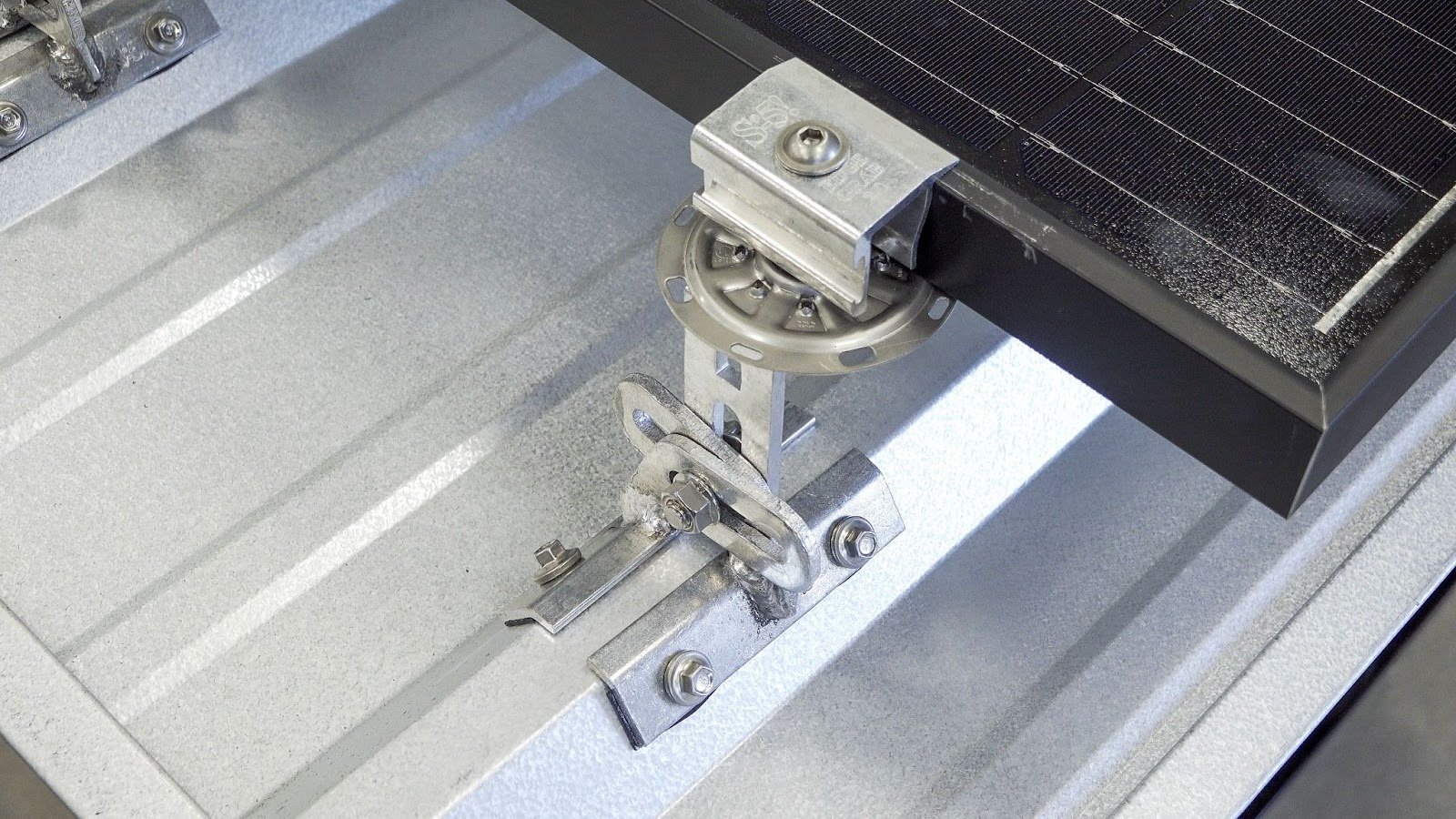
Precision-engineered bracket supporting a rail-less solar mounting system on an exposed-fastened metal roof, combining sleek design with structural reliability for efficient solar installation.
If R-panels are part of your offering, understanding the fastening technology is not optional — it’s a must. Getting it right helps protect your margins and boost your credibility.
This blog will explain:
- What an R-panel roof is
- Why watertightness testing matters
- How engineered attachment systems help reduce risk, prevent callbacks and ensure long-term roof performance
What Is an R-Panel Roof?

A commercial building with an R-Panel metal roof, featuring solar panels mounted directly to the ribs using engineered brackets and a rail-less solar mounting system.
An R-panel is an exposed-fastened metal panel commonly used for roof and wall applications on commercial, industrial and agricultural buildings. The “R” stands for “ribbed” since the inception of the term. And the ribs are trapezoidal in cross-sectional shape. A later variant is the “PBR,” which stands for “purlin-bearing rib.”
“R-panels are very different from standing seam or corrugated systems and serve a distinct market, particularly in the Southwest U.S.,” explained Lane Haddock, S-5! Application Engineer. “If a homeowner wants a reliable metal roof but doesn’t have the budget for a standing seam system, an R-panel is often the practical choice. It delivers durability and performance without the higher price point.”
Key features of R-panels:
- Ribbed profile for strength and water shedding
- Raised major ribs and smaller intermediate ribs for rigidity
- Exposed-fastened system for direct attachment to the structure
“They’re also ideal for agricultural use, where performance often matters more than aesthetics,” Haddock added. “The goal is installing a roof that’s durable, dependable and built to last.”
Reliable R-Panel Attachments: Engineered Brackets Tested for Water Intrusion
Today’s roofing contractors are more than installers — you’re consultants, problem-solvers and risk managers. Every roof penetration, whether for snow retention, solar mounting or rooftop utilities, introduces waterproofing risk. How those attachments are engineered and tested determines whether the roof performs for decades or generates costly callbacks.
When roof penetrations are required on an exposed-fastened profile, such as an R-panel, the roof's long-term performance depends on how well each attachment resists water intrusion. Field-applied sealants can degrade, compress unevenly or fail over time, so engineered brackets with factory-applied sealant technology are critical. These sealants are designed to maintain consistent compression and performance, even as the roof undergoes thermal expansion and contraction.
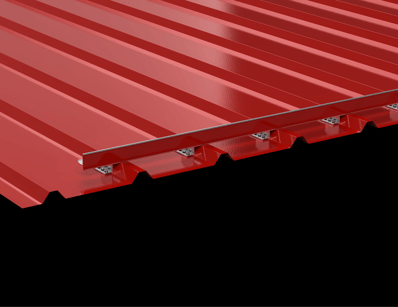
Engineered bracket with snow retention system securely installed on an R-panel metal roof, designed to reduce the risk of snow slides while maintaining roof integrity and performance.
ASTM E2140 testing determines the resistance of an attachment to water penetration when subjected to 6 inches of static water pressure. Brackets that pass this rigorous standard are independently validated to maintain a secure, leak-resistant interface under conditions that closely replicate real-world roof exposure. This testing, conducted in a certified third-party lab, shows exactly which attachment systems can reliably help protect your roof against water intrusion over the long term.
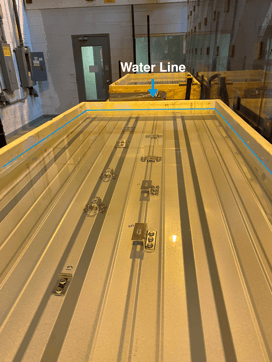
Brackets undergoing ASTM E2140 testing, demonstrating water resistance with a marked 6-inch water line to ensure reliable performance under simulated static water pressure conditions.
The Bottom Line for Roofing Contractors
R-panels are a reliable, budget-friendly metal roofing choice — but how you attach accessories matters. Whether you’re installing snow guards, solar panels or utilities, the guidance is clear:
- Choose engineered attachment systems designed for metal roof profiles and backed by testing and documentation.
- Do not use products that compromise the roof’s weatherproofing. Use brackets and fasteners with factory-applied, integrated sealant technology to help prevent water from penetrating the panel surface.
- Choose metal roof attachments with industry-leading lifetime warranties to ensure long-term performance, reliability and peace of mind for your roof system.
When a fastening strategy is engineered rather than improvised, you’re not just installing accessories. You’re protecting your reputation, minimizing liability and delivering a roof system built for long-term performance.


